Hot ImagesHot ImagesHot ImagesHot ImagesHot Images

May 9, 2012

Marginalia: the blue-ink brigade


When I acquired a Kindle, I wondered whether I might never buy a book again. But then I remembered that when I bought my first CD player, some time back in the early 90s, I didn’t stop buying vinyl. OK, so if a new album came out, I’d probably buy the small expensive version in the case that cracked, rather than the larger, slightly less expensive version in the sleeve that bent at the corner and split along the edge. But I’d still be mooching around dank second-hand shops and windy car-boot sales for Northern Soul singles and kitsch MOR LPs and limited-edition translucent 10-inch discs by cod-psychedelic wastrels from Ashton-under-Lyme.

So it’s not terribly surprising that last weekend found me taking away very nearly an armful of variously damaged paperbacks, including Toby Litt’s Finding Myself. One of the quirks of this 2003 novel is that the text consists of documents supposedly retrieved from the laptop of a fictitious author, Victoria About, with blue, handwritten amendments, corrections and suggestions from her editor all over the hard copy. For those used to pages of neatly justified, spaced and kerned black-on-white type, it might be a tad distressing.

But I vaguely remembered hearing about this gimmick when the book originally came out, so I didn’t embarrass myself by asking for a clean copy or demanding a discount. In fact, I went to the opposite extreme: when I found squiggly add-ons in the next book I picked up –  Retro: The Culture of Revival, by Elizabeth Guffey – my instinctive reaction was that this was all part of the author’s intentions as well. The following is underlined in angry biro:
The literary historian Jean Starobinski has suggested that it was only with the advent of bacteriology and pathological anatomy in the late nineteenth century that nostalgia disappeared from medical journals, becoming the province of poets and philosophers rather than doctors.
Now, Dr Guffey didn’t provide the underlining on that bit. But I bet she wish she had done.

(The image is the title page of a biography Jorge Luis Borges, with contributions by its owner, the late David Foster Wallace.)

PS: A different angle on the paper vs digital debate: Julia Jones on the fire that destroyed 40 years’ worth of her partner’s work.

May 8, 2012

Harper's Bazaar Australia: Burma Rising


HB Australia, May 2012

Enigmatic, mysterious, often perilous, Burma has been closed to travelers for decades, but this unsung Asian hero is now open for business. Julie Earle-Levine rolls up the shutters

Burma, now known as the Republic of Myanmar, has always drawn adventurous travelers, designer Donna Karan among them, despite being shrouded in secrecy and under military rule for 50 years until 2011.

But with the famously resilient and formerly house-imprisoned spokesperson for its people, democracy movement leader Aung San Suu Kyi encouraging visitors, now is the time to book in your trip.

As an Australian journalist living in New York, I felt hopeful of change last year after reading of the appointment of a civilian president. The ever-gracious Suu Kyi, who emerged from spending much of the past 22 years under house arrest in 2010, is now running for parliament.  I can’t wait to see Burma for myself.

After a nearly 30-hour flight, the deep green pool set among the lush, palm- fringed gardens at The Governor’s Residence, a  colonial-style teak mansion that dates back to the 1920s, beckons. A swim, delicious watermelon juice, fresh papaya and a croissant and coffee (the coffee is good, even though it is a “tea”country) is the perfect way to refuel before exploring my surroundings.

Yangon, previously known as Rangoon and the former capital of Burma, is stunning, with crumbling Victorian- and Edwardian-era buildings sitting alongside ancient Buddhist pagodas, churches and mosques.

There is a new pulse in this age-old city. Locals say the changes are coming fast — until recently, access to blogs and certain websites was blocked, foreigners could not purchase property and young artists were afraid to show their work.

And there’s been a surge in tourist numbers. “We call it the [US Secretary of State Hillary] Clinton effect. [Mrs Clinton made a historic visit to Burma late last year.] January was up 20 per cent on the previous year,” says Nina Sophie Tomaschko, ground operations manager at Orient-Express, the British-based travel brand that has been operating in Burma for more than 16 years.

Visitors often start in Yangon and move on. But you should stay a few days to see the 2500-year-old Buddhist Shwedagon Pagoda, the Sule Pagoda, built with four entrances in the Burmese Mon style, and the buzzing Indian quarter and Chinatown. Temple hop to find Buddhas of every type, from pulsing disco ones to those carved from giant teak trees and towering golden renditions. At the
Chauk Htat Gyi Pagoda, novice monks pay their respects at a huge, 65-metre-high reclining Buddha. 
My guide, Thet Naing, points out Suu Kyi’s house, its fence topped with heavy barbed wire. I later see Suu Kyi at the airport, in bright blue silk, walking with a purpose, head held high, the country’s heroine. The best-selling souvenirs here are T-shirts bearing her image.

The next stop is Bagan, a short flight from Yangon, where a still-small number of tourists go to see a staggering 2000 temples and pagodas dotting the landscape alongside acacia, cassia and palm trees. Here, pagodas and temples shoot up into the sky, some shaped like bells and others adorned with 11th- century frescoes.

Incredibly, there are no lines at any of these. Mass tourism is not here yet. At sunset, I head over to Bagan Temple. It’s a steep climb to the top, and once at the summit, I realise getting down the stairs won’t be easy. But the view is worth it – there are temples in all directions, glimmering in the sun as far as the eye can see. It’s also the first place where young girls approach me, their faces smeared with thanaka — a white paste made from wood and used to protect their skin from the sun — and timidly ask for cosmetics.

“Mascara? Lipstick?” says one, outlining her lips to explain. Naing says that Burmese women want to buy foreign brands. “Women here don’t like the fake stuff from China. They prefer real make-up and they don’t care if it is used or not. They will buy it.” A tube of Chanel lipstick is as precious as gold here.

I bike to the Ananda temple at sunrise, passing women carrying baskets piled high with wood or loads of flowers, young monks burning leaves, and families, riding four to a scooter. At the temple, there is only a monk sweeping, the rhythmic swish swish of the leaves the sound of a new dawn. The temple brings an unexpected bonus – internet access, which is sketchy across the country. Mobile phones usually don’t work here in Burma, and power shortages are common. After a few days of not being able to check my messages, the anxiety eases.

The pace here, even in the cities is calmer. There is a gentle quality and beautiful innocence to the people. One day I visit a clinic with Dr Than Hun who contributes to local medical aid facilities, including after Cyclone Nargis devastated the Ayeyarwady Delta  (west of Yangon) in 2008. Three hundred people wait patiently to see him each day, their needs ranging from the
contraceptive pill to serious illness.

Naing tells me that most people are genuinely happy, perhaps because 90 per cent of Burma’s 70 million residents embrace Buddhism. Last year, about 500,000 people visited the country, compared with six million tourists to Cambodia and 17 million to Thailand. Why do they come here? “Apart from the Buddhist pagodas, I think we have very nice people,” says Naing.  “The people
are very friendly to foreign visitors. The Burmese are a different race.”

Sitting at a tea shop for a cup of chai attracts curiosity and the locals want to talk, especially about where I’m from. Many Burmese don’t yet feel completely safe to talk about politics in a public area. The junta is among the people in plain clothes and there are still many “restricted areas”. Hopefully, things will change.

At the Bagan Market, two young girls selling traditional Burmese skirts —longyis — proudly show me a picture of Suu Kyi and Hillary Clinton on her recent visit to the country ... their smiles speaking a thousand words of hope.

ends


May 6, 2012

The Observer gets Twitter (wrong)

When I’m not here, pontificating about French theorists and Japanese novelists and Charlotte Rampling’s legs, I’m often to be found on Twitter. Have you heard of Twitter, by any chance? There’s so little coverage of it in the mainstream media, sometimes I rather think I might have imagined it.

I’m being sarcastic, of course; one of the modes of discourse that Twitter isn’t very good at conveying, to occasionally disastrous effect. And another thing that Twitter can’t do very well is to express to non-participants what’s so good about it. I usually just tell people to sign up and plunge in; and if they respond with that tired trope that 95% of Twitter is people telling you what they had for breakfast I say nonsense, it’s 70% at most.

So it’s good that a serious, respected newspaper such as The Observer has taken the task of explaining to naysayers and noobs what the attractions of Twitter might be. Nah, it’s that sarcasm again. What they’ve done is to ask 50 people who use Twitter to name three people they follow, and why. Now potentially this might have been an interesting exercise, a chance to investigate the more unlikely corners of people’s cultural hinterlands, the strange nexuses of real and virtual friendship, the digital spin on six degrees of separation that Twitter offers. They could have delved into people’s experiences of RTs and hashtags, FFs and tweetups, of how trends can erupt from nowhere then evaporate just as fast, of the collective joy and anguish of livetweeting elections and cricket matches and riots and revolutions and The Archers. They could have selected people who have used Twitter to do extraordinary or amusing or horrible things, people who have pushed its capacity to change perceptions and attitudes, sometimes even lives.


But no. They chose 50 variably famous people who happen to use Twitter. Now, some of them (Caitlin Moran, Grace Dent and Peter Serafinowicz for example) have clearly thought about what Twitter can do, and use it with wit and passion and imagination and inspired daftness. But Rio Ferdinand? Danny Alexander? Does it help our understanding of Twitter to know that Gary Barlow has “always been a fan” of Jonathan Ross? Or that Joan Collins follows her daughter? Or that lots of people follow Stephen Fry? Fry, incidentally, is not among the 50 – I can’t imagine they didn’t try to get him – but instead they’ve one Edna Fry, a Tweeter who pretends to be Fry’s wife. Which could have been a springboard for all sorts of ideas about the pleasures and perils of concocting an online persona. But isn’t.

In the introduction to the piece, Lauren Laverne quotes Graham Linehan (someone else who should be on any self-respecting list): “Celebrities who don’t follow anyone! You have in your possession a magic mirror, and you’re just using it as a mirror!” Anybody reading further to find out what’s so great about Twitter would find a rather grubby window, through which they might be able to discern a small group of famous people talking to each other about being famous. Which is even more tedious than breakfast.

PS: Mic Wright (another who ought to be on the list) reaches similar conclusions.

May 2, 2012

Of putrefactive brainfarts and fanciful testicles


My recent ambles through the ones and zeroes have thrown up two nicely judged slabs of wording, separated by 400 years or so. First, Grace Dent, in The Independent, characterises the qualities required to be nominated for a Turner Prize as a “dogged determination to grab fanciful brainfarts and build them.” Which is, if you think about it, the same tenacity required to do anything that isn’t tedious and banal. We then turn to the anonymous surgeon who carved up the corpse of the monstrously inbred King Charles II of Spain, whose unhappy life ended in 1700. The autopsy revealed “a very small heart the size of a grain of pepper, the lungs corroded, the intestines putrefactive and gangrenous, in the kidney three large stones, a single testicle as black as coal and his head full of water.” Had chronology been more accommodating, perhaps the operation might have been recorded and entered for the Turner.


May 1, 2012

Duran Duran and the Olympic gig: white boys always shine

I’ve never been a big fan of positive discrimination, mainly because it doesn’t work; inevitably it’s easier to base quotas on empirical criteria such as race or gender or disability, rather than things that are harder to quantify but no less real, such as socio-economic status class, there, I said it. But I couldn’t help but raise an eyebrow at the choice of acts for the gig marking the beginning of the Olympics. Leave aside for the moment the galumphing tedium of all the performers on the bill; Duran Duran were moderately amusing for a couple of albums in the early 80s, while the others (Paolo Nutini, the Stereophonics, Snow Patrol) have never even aspired to such lofty standards. That said, do we really think that London in 2012 is best represented by a dozen or so white men in their 30s, 40s and 50s, many of them playing guitars?

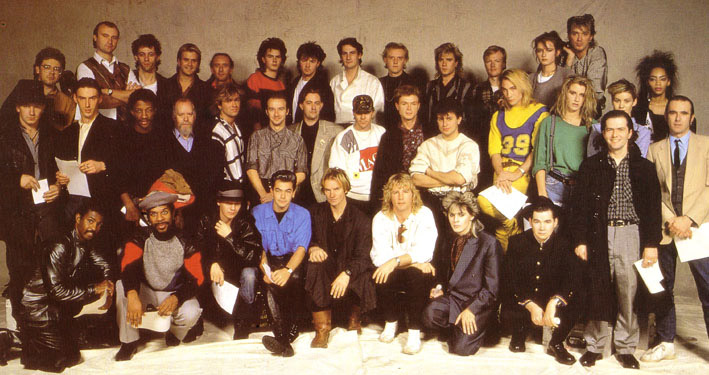
Obviously nobody wants blatant tokenism: I’m old enough to remember the line-up for the Band Aid single, with a few members of Shalamar and Kool & the Gang hovering around the edges. But for an event that aims to show off 21st-century Britain to the world, this is a bit embarrassing.

PS: In the Telegraph, Lucy Jones fumes.

April 29, 2012

Unborn chicken voices

To mark (roughly) the fifth anniversary of my book about OK Computer, here are some small children talking about one of the songs on the album. The funny thing is, I bet the various members of Radiohead were just like these middle-class wannabe rock hacks when they were smaller. Not such good dancers, though, obviously.

April 5, 2012

NYT: A New Day (Spa) in Burma

New York Times: Vain Glorious
A New Day (Spa) in Burma

By Julie Earle-Levine
Who: Inya Day Spa, Yangon (Rangoon), Myanmar.
What: Thai massage, reflexology, body scrubs, facials, manicures and pedicures.
Where: 16/2 Inya Road, Kamayut Township; (95-1) 537-907; inyaspa.com.
Why Bother: In Myanmar, where tourists are just starting to venture as the country moves toward democracy after decades of military rule, Western hotel chains are scarce and spas really don’t exist — until now, that is. Yangon’s first day spa is attracting Burmese women (and even some men) as well as expats and tourists.
Let’s face it, in a country where women still wear thanaka (a white paste on their faces made from ground bark, to protect and condition their skin from the sun), it’s difficult to get Western products. That doesn’t mean people don’t want them: a used (that’s right — someone else’s!) Chanel lipstick is a precious find.
At Inya Day Spa, the facialists use French products (Thalgo), and the treatments are Thai influenced. Damian Lau, who is from Seattle, and his Burmese wife, Michelle, saw a need for a “nicer,” more Western-style spa. Inya is named after the bustling road where it is located and has simple décor with four private rooms, Thai massage beds and a nail salon. (The spa just started doing gel nails and uses OPI American polishes.) Inya’s signature spa product is a natural body scrub, in green tea, jasmine rice, papaya or tamarind. The papaya smells heavenly.
Inya is not luxe, but it is a sanctuary amid the streaming traffic — and a temperamental taxi with no air-conditioning and a flat tire! I arrived drenched in sweat to a cool, welcome retreat. You enter reception, then walk across a pond filled with hundreds of koi and surrounded by lush green palms. First stop is the new Boost Bar for fresh smoothies and juices. Try the Boba Berry, a thick smoothie made from blueberry, apple and banana. Guests change into plum-colored knee-length Thai sador pants, tied high above the waist. (You keep on your own shirt.)
I went twice: once for massage, once for reflexology. The basic massage was deep, hitting all my acupressure points, and I dozed off, my calves (made weary from temple-step climbing) melting into a relaxed state. The staff is Burmese, but Thailand-trained, since getting visas for Burmese to leave the country is still tough. The election Sunday of the longtime pro-democracy dissident Aung San Suu Kyi may change things, of course.
In the nail salon, Japanese men were sighing as their calves were pummeled. A British banker was tip-tapping away on his laptop. The spa has free Wi-Fi, which is a big plus since Internet service in Myanmar is sketchy at best.
Bookings can be hard to snag on the day. Lau plans to open a second location on the fourth floor of the Junction Square Shopping Mall, about a 10-minute drive from the current location.

How Much:
Thai massage, about $20 for 90 minutes;Thai foot massage, about $10 for 75 minutes.